|
|
 July
16th: Proximity Nine July
16th: Proximity Nine No one really ever knew who you were. I could never really explain it to anyone, and my attempts just made them all even more confused. So I stopped trying and kept a lot of this to myself, occasionally dabbling and poking at the periphery, knowing there were some things not meant to be explained. I think I made a mistake trying to go against the forces that were driving me, and by ignoring them, they seem to have taken me off course. It’s difficult to try and regain something you’ve lost, especially something so ephemeral and transient as what we shared, but your memory lingered inside, dribbling out from time to time. I had to shut it out sometimes, for I know the drowning. In shutting this down, I also had to shut down many other memories as well. It wasn’t easy, but it was essential in moving forward. After awhile, the tricks I played on myself worked a bit too well, and I feared I had actually gone and lost you permanently. After what has seemed like an extended period of complete darkness and sadness, I think I might have seen you again the other night, though I know a lot has changed, it’s reassuring to know that you’re still here, even if occasionally, there’s only a momentary glance hiding deep inside another dream. It’s good to see you again after all this time. I’m glad you decided to come back and see me again. We had so much shared history, it would be sad to lose all of that. I do apologize for spending so much time drowning in all these figures, statistics, percentages, sales numbers, attach rates, charts, numbers and letters. It’s easy to lose sight of the things we once held in so much esteem. You can lose yourself trying so hard to be something you aren’t – that’s something I finally figured out. Some things have changed, but some haven’t, I still haven’t forgotten you, despite all the years that have passed, I still hear your voice and the things we used to talk about. Your long absence made me feel so lost for so long, I’ve only now just found my way back to you. The dreams we shared were so vivid, so real – the journeys I took into other dimensions, other realities were so intoxicating. They meant so much to me, the fact that we could escape, even for those short periods of time helped me to see there was much more to things than most could ever see. I want to thank you for allowing me to share those times with you. Now that you have returned, I wanted to know if you still remembered that trip we took through the skies together. You said you wanted an adventure and we walked towards the open field in the center of that cursed city. People thought I was making it all up, but I still remember floating up over the buildings with you, leaving the boundaries they’ve set for me was so liberating. We went to places together, and I told you to go forward into the crowds even though you were hesitant. We discovered a lot of things together inside what seemed like an endless forest. You wandered off onto your own path, and you said it made you afraid to be alone in this strange, alien place. You said you heard footsteps, but didn’t want to know what was making those noises. You said you didn’t know what you were doing, until I provided you with direction. I helped you but you saved me, as I nearly fell off the narrow bridge into the waters and drowned. You held out your hand and grabbed me before I could fall, this before you even really knew who I was. For this I was always your champion, as you were mine. You can never be replaced or forgotten – as much as the misguided voices tell me not to look back, there are memories I can’t leave behind. July 18: Proximity Seven You take the first awkward steps back from the darkness only to find yourself in a completely different world from the one you thought you’d end up in. The various markers you used to measure things with have vanished, leaving you disoriented. They remain on a subconscious level, still calculating and measuring but these figures don’t mean what they used to. You find yourself in a world that feels colder and emptier; the smiles you see feel false, like the façade of a play or movie, there doesn’t really seem to be anything behind them. None of this feels right – as if you’re in someone else’s dream. You walk faster, pacing your steps to cover more ground, but feel as if you are falling inexorably behind in a race you didn’t know you were running. Feeling the cold wind on your face, you suddenly feel less connected to the future than you once did. What once held so much promise and hope now feels empty and sad. The promised golden journey into ever increased prosperity and technology becomes tarnished and the shine on the surface slowly fades as it turns into smaller areas pock-marked by black, disjointed scars. A closer examination reveals much that has been lost and very little that can compensate. An unquestioning faith transforms into an ocean of doubt – will the latest fill the void? Will a faster processor return a smile to your face? Will a smaller size bring back the memories stolen from you without warning? You still track the daily news, the latest announcements and press releases, but you know that one day the overload will end. You’ll face eternity alone, and all the silicon chips in the world won’t matter. Perceptions change and the years ahead, which once felt so warm with so much potential become oppressive, like a prison sentence. They mock you in cruelly offering only fading memories of happier times. A decade has passed since you were blown into another world by your second wind. You fruitlessly hoped your seemingly late rediscovery of your night would last forever. You reveled in its darkness and watched as the lasers of light pierced the skies in defiant synchronized dances, forcing the stars and their endless mystery to bend to their will with only the smallest provocation. You said you would dance all night with me until the sun came up, but you never really believed it would. When our long night together ended, I found myself forced to endure an even longer night alone. As an objective and disinterested party, it is my hope that perhaps you help me. Maybe you can tell me what I’m missing here, but there’s just a cold echo where the things we were together once stood. Now, I am lost inside a consuming world, reverberating inside of itself, a constant churning, forcing me ever forward until I feel completely disoriented. In these arms of condensation, slowly I feel an emergence coming towards me, as I walk alone on this electronic battlefield, a virtual human inside an unreal warzone. You and I shared many of the same memories, we fought the same battles, explored many of the same places. You stood by me through many dark nights, you carried me through nocturnal waters, but the truth is I don’t know if I ever really knew you. All those years together, and I’m still unsure what you even represent to me. Slowly, the darkness recedes only to be replaced by a gnawing predatory emptiness. Silence becomes my companion – and I stare into the void only to close my eyes and imagine you were still here. Doors slammed shut, the keys we used to unlock our world have been taken from use, the hands we held together are severed. Alone, I wander at the edge of the ocean and I feel like I’m slowly drowning down here without you. I look in the mirror and see only a pale imitation of someone I once was. Older, sadder – having accomplished little since you left me. A vibrant world I once knew feels older and forbidding. Colors desaturate until they wash together into an inescapable gray, waters dry under eternal night stars, guiding us onward until it is our time to journey upward. This is where things become unsustainable and the nights feel quite uncomfortable. These truths are unchangeable and intractable. I still find myself haunted by those dreams. I see her again and again standing alone facing the darkness of an alien world with a constant fear inside. I spent hours trying to explain this, examining the smallest details and obsessing about what they meant. All this work was wasted, as I slowly realize that any answers I would find can only unlock more questions and I’m unsure if I really want to know. I walk through the corridors and hallways, across bridges over treacherous waters, filled with the tattered flags of forgotten civilizations. I’m constantly running towards her only to have her further pushed away. These connections remain close for what seems like but quickly vanish instantly, like uncountable reams of electronic data erased vanishing into an endless night. As you feel yourself sinking inside knowing that they will end up leaving you. No matter what you do, you’ll always find yourself standing alone in the darkness, just like she used to in your dreams. Condemned to stand alone in the darkness, watching as the debris piles up in eternally growing mountains of forgotten, worthless data. July 20: Proximity Eight Under the bluish white skies, it's easy to lose yourself in these times, you can drown in endless waves of information, daily hourly to the minute. A constant flow but none of it draws you closer to understanding. Quit while you're still ahead, before you completely lose your identity. Under a motion controlled digital sky under your exclusive command, you wonder what it all means, if it means anything. Your pleasure, your curiosity - the world is at yours to explore endlessly - everything you ever knew appears instantly and effortlessly. Enticed to near-perfect exclusion, you find yourself constantly stimulated but completely alone. Your sole companion is a mirror of reflected memories, dribbling out in a predictably synchronized release schedule. Those same numbers keep turning up again and again. Constant reminders of what was left out of the story, the little details that mean nothing to anyone except you, a shard of glass reflecting from the ground on a hot day – resurfacing inside of your mind, an echo of the past. As you take it all in, you sometimes have moments for yourself. While your thoughts slip, slide, merge and melt into one incomprehensible mass of confusion, the world outside continues to spin completely oblivious to your presence outside of the occasional crash. You feel yourself falling helplessly behind the digital onslaught, a hyper-kinetic dream, bereft of facial expressions, emotionally bankrupt. You are unable to think for yourself without assistance, much of your soul has been disabled in order for you to survive in a safe zone. You are protected from your biggest enemy. The barriers separating you from the outside exist to protect you from yourself. As the years slide by, you gradually realize that the body you once had has been slowly replaced with a colder yet more efficient model. Your new body is a multi-media power-house able to function at incredible speeds, yet without purpose or direction. This wonder of technology that encases your withered remaining physical body has empowered you with endless information. The smallest, most insignificant thought is all you need to trigger the device. It allows you to relive most of your life's entertainment - songs, shows, movies, games, music, walks, conversations, books, news - in the blink of an eye. You begin to become confused - were these memories I once had, or something that was downloaded so often it became a kind of faultless recreation of a life you once had. Did you really like that band in high school - was that your best friend or an actor? It becomes harder and harder to tell the difference. You can blink your eyes and drive down a road you’ve never seen before, but feels vaguely familiar. As more cables, cords, chips are added, you fall deeper into your armored prison. It's grip gets stronger with every operation. The procedure began as miracles but became routine and feel like annoyances now. Extending your power, claiming your freedom even as your strength increases, and the only thing you recognize are the stamped, reconstructed hands that have no flaws - no pain, arthritis dispatched to the dust of history. Your eyes can see eternity - forever wandering through libraries, reconstructed ancient cities, memories of days gone by in full 3D, scanning, gathering, unceasing in their endless appetites for all that the world has to offer. Your life becomes a series of abstractions masquerading as a kind of reality slowly submerging into itself where you finally drown under its spell. Cursed into this existence by circumstances that seem bizarre now but seemed logical at the time, you walk through time with no time to meditate, more and more information. Gathering becomes the mission, you can't stop to process it - afraid to fall behind in this ceaseless marathon. The pulsating, heaving mass of words, statistics, sound and color is pleasing. You have to admit it, though the pace can be draining sometimes. All of these memories build upon each other. However, there is one memory that comes through the doors like relentless ghosts despite your best efforts to defend yourself. No matter what you do, you won't be able to avoid confronting it. There's still one place deep inside your soul where she resides, something that cannot be wiped out no matter how many times play through the same scenarios in your mind. This won’t change, no matter how many messages you post. It doesn't matter what half-forgotten songs you download only to forget once again. The one thing in your life you cannot erase from your memory banks. You try to delete, but it doesn't leave. These are echoes in your original memory, something that you forgot to save digitally - which means you can't edit, you can't change, deny or, destroy. A haunting episode you failed to capture and save on your embedded camera phone. This haunted feeling that all your internal processors, with their realization engines can't get themselves around, a series of events that you cannot verbalize - something you can't explain. You know something happened, but can't explain exactly what it meant. The mystery effortlessly haunts you, as surely as the wind still blows outside your hermetically sealed windows. You never really could explain this to anyone and now, as the distant memory loses its definition, the meaning is lost subsumed under years of assault - now only an outline. You can't be sure, but you think it's about someone you saw for the briefest of moments many decades ago. A smile and a voice that disappeared like the smallest but brightest shard of blue glass in a million pieces, falling from the sky, buried deep into the ground, under layers of dirt and rock, discovered accidentally yet treasured and studies intently. This was only the smallest sliver from another world, but worked wonders in providing hope and inspiration, not to be discarded carelessly and forgotten as just another insignificant memory without meaning, sunk under waves of endless worthless information. May 27: Breaking new sounds with Orbital’s Wonky  Listening to Wonky,
the long-awaited new album from techno brothers Paul and Phil Hartnoll, it’s hard not to be impressed by how little has changed, and how much has with Orbital in the eight years since their last album came out. Wonky has many of the signposts that indicate it’s undeniably an Orbital album, but it goes in other intriguing directions that bring on a free-form reinvention of their sound with contemporary elements. Wonky, the title track is the perfect example of this, with its aggressive hip-hop form, surprisingly effective and interesting vocals from talented rapper/singer Lady Leshurr, twists and turns, takes a sharp drop and returns in a big way, blasting through its unapologetic big-beat thrashing fearlessly, while taking on a little of that weird dissonant Orbital chiming to bring things home. They’ve always had a Borg-like talent for assimilating different sounds and making them their own. Wonky continues this trend with some unexpected surprises in some places, which makes you wonder where they found some of these samples. Experimentation is the key to Orbital, and going in without getting trapped in the
proverbial box is what makes great music.
Wonky takes this approach and kicks it forward to incorporate contemporary dance sounds. Listening to Wonky,
the long-awaited new album from techno brothers Paul and Phil Hartnoll, it’s hard not to be impressed by how little has changed, and how much has with Orbital in the eight years since their last album came out. Wonky has many of the signposts that indicate it’s undeniably an Orbital album, but it goes in other intriguing directions that bring on a free-form reinvention of their sound with contemporary elements. Wonky, the title track is the perfect example of this, with its aggressive hip-hop form, surprisingly effective and interesting vocals from talented rapper/singer Lady Leshurr, twists and turns, takes a sharp drop and returns in a big way, blasting through its unapologetic big-beat thrashing fearlessly, while taking on a little of that weird dissonant Orbital chiming to bring things home. They’ve always had a Borg-like talent for assimilating different sounds and making them their own. Wonky continues this trend with some unexpected surprises in some places, which makes you wonder where they found some of these samples. Experimentation is the key to Orbital, and going in without getting trapped in the
proverbial box is what makes great music.
Wonky takes this approach and kicks it forward to incorporate contemporary dance sounds.
Orbital’s older albums always seemed to find new ways to interpret then-trendy movements, like Sniv’s appropriation of drum n bass, that turned the formula on its head. Dubstep has become increasingly popular in clubs over the past few years and while its most associated with party music, Orbital has applied this style to its old favorite “Satan” in a new form called, Beezledub, which blends the reggae-infused sound with a seemingly discordant menace of clashing bleeps and keyboard noise toward the end that makes it sound like a house-party over-run by evil demons, like a scene from a weird horror movie. For longtime fans, this is a cool way to redo the track, giving it a different feel from the many earlier versions. While there are many innovative moments, several songs on the album have a more traditional Orbital feel to them. First among these is “Never”, showing their brilliant scale and ability to create expansive soundtracks that feel cinematic and dreamlike, slowly building to a peak, and moving into different directions until its moving at an incredibly fast pace. Immediately after this track comes “Straight Sun” which starts off kind of dark and moves into an unexpectedly light, dancey direction with heavy synths and dance beats layered on top of more subtle notes to create an upbeat, driving track that sounds like classic Orbital. “Stringy Acid” is a brilliant track that feels like it would be right at home next to their classic “Chime”, with its epic feel and massive beats wrapped in a late-80’s rave vibe that could be one of the album’s enduring classics. The final track on the album, “Where is it going?” ends the album on a high note, with a classic techno build-up with multiple layers of sound that finishes the album with an appropriately epic feel and winks back to the first track, making for a complete circle on the Wonky journey. Other standout tracks on the album include their collaboration with Zola Jesus, a sunny wordless track called “New France” which is light and airy and soars on her beautiful vocals and ethereal vibe. Its definitely got that Orbital feel to it and feels right at home within their other tracks. Wonky begins with a track called “One Big Moment” which features voices of an old man jumbled together which then launches into a brilliant, uptempo track pausing for some long, joyous bleeps in the middle, making you feel immediately like you’re in a different kind of soundscape. Orbital is one of the few bands that can pull-off a head-fake move, where a track starts off one way and ends up in a completely different place. This time it comes during the middle of the middle track “Distractions,” The first time you hear it, you’ll discover an unexpected change that’s only hinted at earlier on, then it hits you like a rock, pummeling you before returning gracefully back to where it originally came from. This is definitely Orbital at their finest, stretching out, playing around and surprising the listener all the while keeping a high fidelity with perfectly placed notes and timing that builds, drops, and builds up again. It would have been easy for Orbital to go back and rest on their laurels, producing an album of predictable retreads and falling back on their old sounds. Doing that would have actually gone against their creative grain. Instead of grinding out more of the same, the sound has evolved and changed making this sound current and cutting-edge without completely losing the overall style and approach that have been Orbital’s sound for these many years. Wonky isn’t the result of two brothers going through the motions, but a pair who are still vital, creative and interesting all these years. There are definitely some things that might seem odd or out of place at first listen, but as you re-listen, these dense and seemingly discordant elements make more sense and this album definitely grows in quality over time. This makes for an inspiring and interesting album with an inventive, experimental feel that’s inspiring and enjoyable throughout and ranks neat the top with their best albums. May 15: Phoning home After cataloging our massive video game magazine collection, in order to cull some of the more worthless titles, we’ve uncovered some interesting old issues that illuminate how much things have changed. One of our pride and joys is our early 80’s classic gaming magazines. Joystik was a short-lived magazine that covered the arcade scene in fine style with its new-wave MTV inspired graphic design helping it to stand out from the rather drab competion. Covering many of the high-profile titles of those days, its covers f 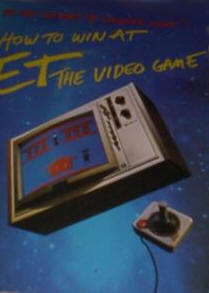 eatured
the likes of Tutankham, Donkey Kong and, Sinistar. The writing was decent for
its time, and its layouts were quite vivid. It was a very forward-looking
publication for its time, though it has seemingly disappeared and been
over-shadowed by Electronic Games and Computer Gaming World. One interesting
fact about the magazine was that it was published by Consumer Guide, a general
interest publisher with an extensive list of affiliated magazines, with many car
buying guides as their most enduring line. eatured
the likes of Tutankham, Donkey Kong and, Sinistar. The writing was decent for
its time, and its layouts were quite vivid. It was a very forward-looking
publication for its time, though it has seemingly disappeared and been
over-shadowed by Electronic Games and Computer Gaming World. One interesting
fact about the magazine was that it was published by Consumer Guide, a general
interest publisher with an extensive list of affiliated magazines, with many car
buying guides as their most enduring line. For those interested in the history of gaming media, one of the more interesting footnotes about the company was that it published what could be considered one of the only dedicated strategy guides of the era. It was for Atari’s infamous ET for the 2600, which, truth be told was kind of enigmatic in terms of play. We were recently lucky enough to obtain a copy of this rare publication, with was quite illuminating. Like modern strategy guides, the pages were illustrated by copious screen shots, each delivering a snapshot of gameplay. The concise, easy-to-read guide actually lets you figure what is actually going on instead of wandering around aimlessly. Instead of walking into the numerous pits and falling to the bottom, as you would, the game also includes a handy map of the entire game world, which can be folded out into a cube. Using this makes playing the game much easier. One final footnote is that the E.T. guide came out in two editions. The first was a plain small paper-back with a plainer layout and much smaller size, while the more desirable version was a magazine style publication that felt like a ‘lost’ issue of Joystik, complete with the funky backgrounds that made the magazine’s personality. This is definitely a cool item to have in our collection, but it isn't easy to find. Fortunately, scans of it can be found on many places on the net, though we'd recommend our old friends at Digiital Press, which features this magazine in nice high-definition for your reading pleasure, it's definitely worth checking out. |
|
|
|